- #react
- #typescript
- #auth0
- #react-router
- #zod
Task Manager (TS + Auth0)
React and TypeScript task manager with Auth0 login and filters kept in the URL.
- year
- 2025
- status
- active
$ cat ./case-study
$ cat ./case-study/problem
Problem
A practice project for typed React patterns: login, protected routes, validated forms and filters kept in the URL, with no backend.
$ cat ./case-study/approach
Approach
Search, status, priority and sort settings live in URL query params. The dashboard reads them with useSearchParams and derives the filtered, sorted list with useMemo instead of keeping a copy in state. A typed context exposes create, update and remove on top of a small service that reads and writes localStorage. If the Auth0 settings are missing, the app skips the Auth0 provider and still runs locally.
$ cat ./case-study/stack
Stack notes
React 19, TypeScript 5.9, Vite 7, React Router 7 and Auth0. The New Task and Edit Task pages validate input with react-hook-form and zod 4. Plain CSS, no UI framework. Deployed on Vercel.
$ cat ./case-study/what-broke
What broke
Setting a due date broke the New Task and Edit Task forms. The datetime-local input gives a local value with no time zone, which z.string().datetime() rejected, and the pages only showed the title error, so the forms did not submit and gave no reason.
$ cat ./case-study/next-time
What I'd do differently
Move tasks behind a real API. Today they live in one browser and are not filtered by the signed-in user, even though each task records an owner ID. Also validate URL params instead of casting them, and add unit tests for the storage service and the query parser.
A frontend-only task manager built with React 19, TypeScript and Vite. Auth0 login guards the task pages. Search, filter and sort settings live in URL query params instead of component state. Tasks are saved in the browser's localStorage.
$ next
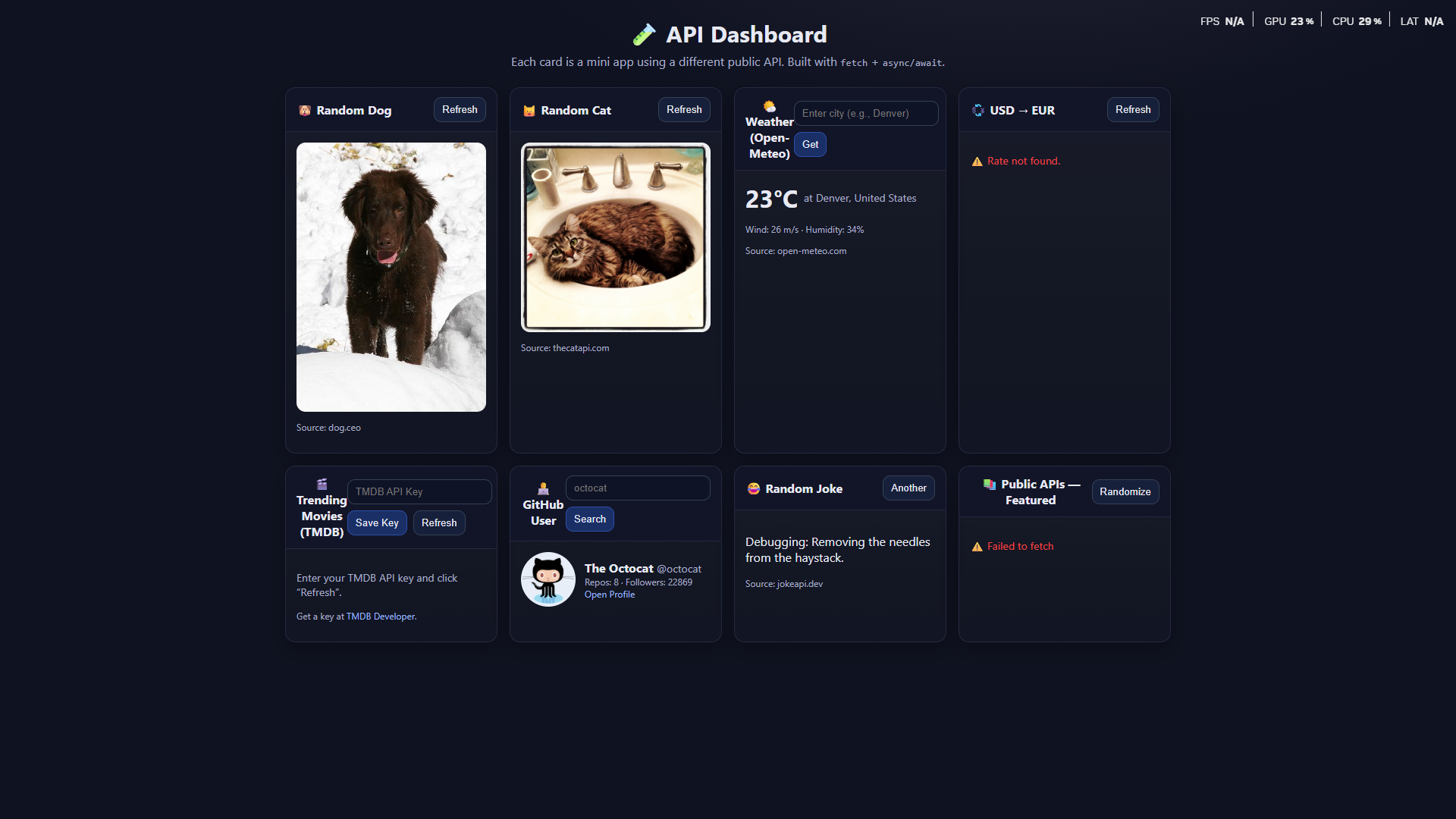
API Dashboard
Single-page dashboard of mini apps powered by public APIs.